ALDEBARAN · AI PRE-CONSULTATION ASSISTANT
How are patients using AI to prepare for their medical consultations?
EDITION
2026
This 2026 barometer presents the main insights from the analysis of more than 300,000 prepared consultations and two surveys conducted among patients and healthcare professionals.
It shows that pre-consultation integrates naturally into care pathways and generates a positive impact for both patients and healthcare professionals.
PART 1
Pre-consultation: a practice adopted by patients of all profiles
In 2025, more than 300,000 patients prepared for their consultation using Aldebaran's AI medical assistant. Among them, nearly 34,000 consented to the analysis of their anonymised data.
A practice adopted by both new patients and existing patients alike
3 out of 4 prepared consultations are for patients who are already being followed up
75.7%
already known patients
24.3%
new patients
The pre-consultation assistant for adults is used at all ages, from 18 to 104 years old
Median age: 48 years.
Age distribution of adult patients who prepared for their consultation (in %)
Women
Men
7.6
6.1
9.0
7.4
9.5
8.9
9.7
8.3
9.0
8.4
8.7
8.3
9.0
9.7
9.1
9.9
8.0
9.2
7.0
8.1
5.7
6.6
4.6
5.4
1.9
2.4
0.9
1.1
0.3
0.2
18-25
25-30
30-35
35-40
40-45
45-50
50-55
55-60
60-65
65-70
70-75
75-80
80-85
85-90
Over 90 years old
A stable preparation rate up to age 75 with a slight decline at the most advanced ages
Completion rate of questionnaires by age group (in %)
90%
80%
70%
60%
80.2
82.4
78.5
80.4
81.5
81.3
80.2
79.7
81.0
81.5
81.0
76.3
71.6
71.3
71.1
18-25
25-30
30-35
35-40
40-45
45-50
50-55
55-60
60-65
65-70
70-75
75-80
80-85
85-90
Over 90 years old
59.6%
of pre-consultation users
are women
18.6%
consultations prepared by a caregiver *
* a caregiver can be a parent for their child, an adult for their parents, a third-party companion (due to a loss of autonomy, an illness, a disability, or age).
Nearly 9 out of 10 patients say they feel comfortable enough to fill out a medical questionnaire
Ease reported by patients in completing a medical questionnaire independently (in %)
Impact of ease of preparing for a medical consultation on the preparation rate (in %)
PART 2
Patient satisfaction and adoption
Data from a survey of patients using Aldebaran, conducted between September 2025 and March 2026
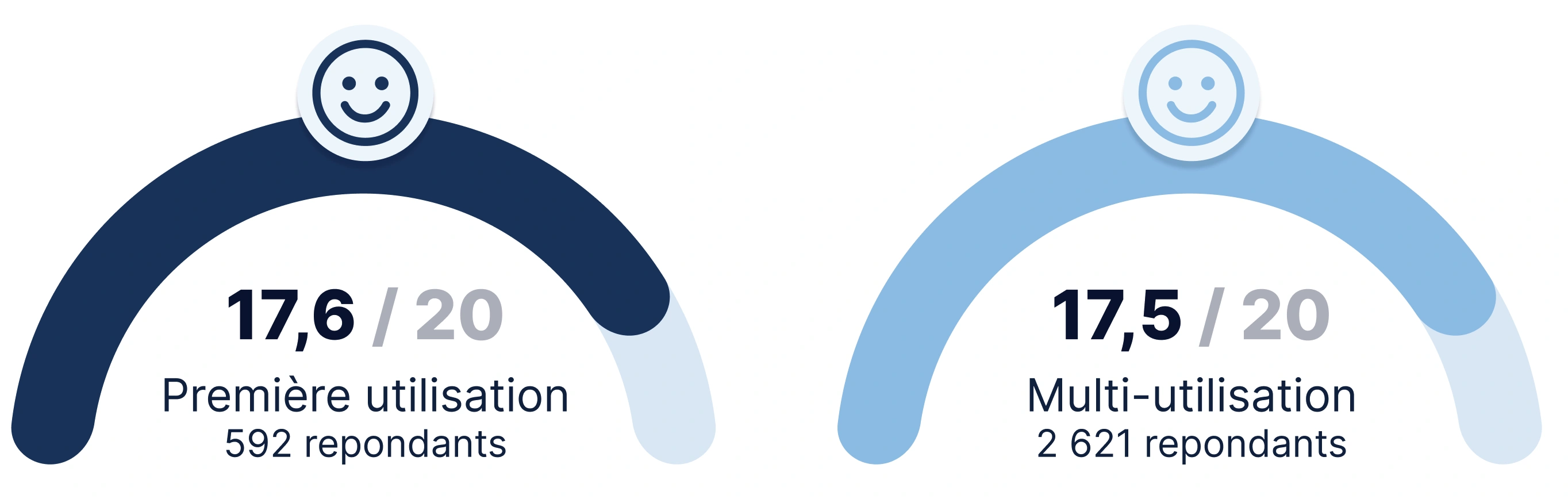
(3,213 respondents), including 592 patients using Aldebaran for the first time and 2,621 patients who had used it before.
High satisfaction from the very first use, which is maintained over time
The score is almost identical between first-time respondents (17.6/20) and repeat respondents (17.5/20).
Distribution of satisfaction ratings of first-time users and recurring users (out of 20)
Consistent adoption among both new and returning patients
The patient's status (new or already followed up) has no impact on the preparation rate, which remains around 80% in both groups.
Completion rate of questionnaires according to patient status: new or already followed up (in %)
PART 3
What are the benefits of pre-consultation for healthcare professionals?
Data in the study is based on a survey conducted in April 2026 among 135 healthcare professionals.
Tangible benefits of pre-consultation that go far beyond saving time
What benefits does Aldebaran bring to you on a daily basis?
135 healthcare professionals answered this question.
Perceived time savings
3.5 min
per prepared consultation
Perceived economic impact
+£192
per month on average
Details of the benefits received in terms of quality of care and ease of practice
Sources: Aldebaran data (AI pre-consultation assistant). Sample of patients who consented to the analysis of their anonymised data
(n ≈ 34,000) in 2025; patient in-app survey (Q4 2025 – Q1 2026, 592 first-time / 2,621 recurring); Aldebaran practitioner survey (April 2026, 135 respondents)
Aldebaran - Barometer 2026 Edition ®
contact@aldebaran.care